Vendor decks promise 87% faster response times. None explain what your team needs to run those tools. AI in cybersecurity is a defined set of techniques that make specific tasks faster — and a set of real risks practitioners must grasp before deploying anything.
What AI in Cybersecurity Does — and Where It Fails

AI in cybersecurity applies machine learning, natural language processing, and agentic frameworks to detecting threats, triaging alerts, and automating response playbooks. The IBM Cost of a Data Breach Report 2025 found organizations with mature AI security use saved $1.9 million and shortened breach lifecycles by 80 days.
The benefits of AI in cybersecurity include processing alert volumes no analyst team could review manually and correlating low-signal traces across endpoint and network data. It fails on novel multi-stage attacks, high-stakes legal decisions, and reasoning chains that satisfy federal auditors.
How Can Generative AI Be Used in Cybersecurity?
| Application | Technique | Security Role |
|---|---|---|
| Synthetic phishing detection | LLM fine-tuned on phishing corpus | Email security analyst |
| Log summarization | Prompt-based summarization | SOC analyst / incident responder |
| Threat-intelligence enrichment | Named entity extraction + RAG | Threat intelligence analyst |
| Automated CVE briefings | RAG over NVD + vendor advisories | Vulnerability management engineer |
| Red team script generation | Code-generation LLM (sandboxed) | Penetration tester |
| Security policy drafting | Instruction-tuned LLM | Security architect / GRC |
Agentic AI in Cybersecurity: The Shift SOC Teams Are Not Ready For
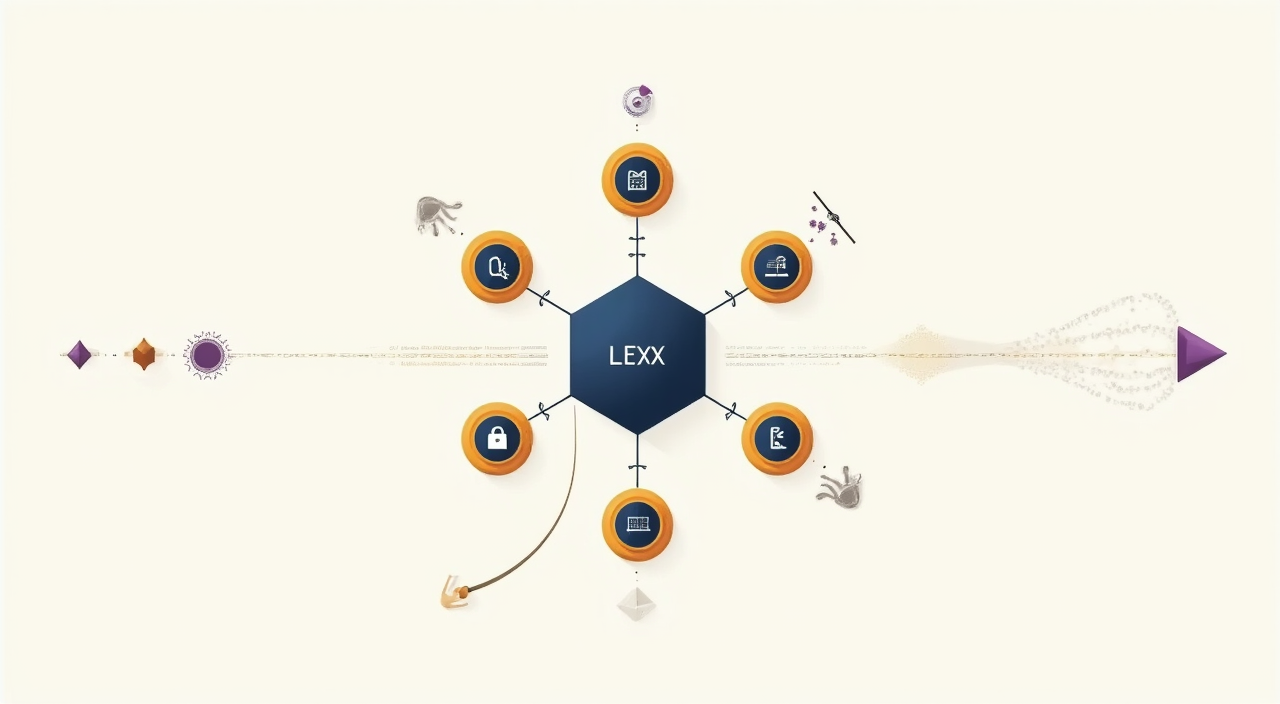
Agentic AI in cybersecurity is the biggest shift in SOC architecture since SIEM. Agentic systems plan action sequences, call external tools, and adjust without a human prompt — cutting triage from hours to under two minutes.
Three new risks:
- Action sprawl: Broad agent permissions mean many changes happen before anyone notices.
- Prompt injection: Malicious content in retrieved threat feeds can hijack agent behavior. This is documented, not theoretical.
- Audit gaps: Workflows without decision logs create compliance exposure.
See the AI + Cybersecurity certification catalog at LEXX Live
AI + Cybersecurity Certifications: The Role-to-Credential Map

The right AI in cybersecurity course depends on your role. Instructor-led cohorts close knowledge gaps faster than self-paced formats.
| Role | Entry cert | Advanced cert | AI-layer cert |
|---|---|---|---|
| SOC Analyst | CompTIA Security+ | CySA+ | AI+ Security Level 1-2 |
| Security Architect | CySA+ | CompTIA SecurityX | CAIP |
| CISO / Security Manager | CISSP | — | CAIP |
| Penetration Tester | CEH | CompTIA SecurityX | AI+ Security Level 2-3 |
| Forensic Investigator | CHFI | — | CAIP |
CompTIA SecAI+ covers AI-assisted SOC work. AI+ Security Level 3 addresses agentic system security and AI red teaming.

DoD 8140 and AI: What Federal Contractors Must Know

DoDM 8140.03 superseded DoD 8570.01-M in February 2023 and requires contractors to “be qualified at the commencement of work” for covered roles. Baseline certifications satisfy the compliance requirement — they do not cover AI governance, adversarial ML, or agentic AI oversight.
For federal contractors in the Washington DC, Maryland, and Virginia corridor: earn the 8140-required baseline first, then stack an AI credential on top. LEXX Live delivers instructor-led training for federal contractors and cleared personnel. Contact a LEXX Live Training Solution Specialist to help Map your DoD 8140 work roles to LEXX certification tracks
Four Risks of AI in Cybersecurity You Cannot Ignore

Adversarial AI. Attackers craft inputs to fool ML models. Researchers at ExtraHop and SentinelOne Labs tracked EDR-killer tools sold on dark web forums at $7,500 and up.
Hallucination. Generative AI produces confident, fluent, wrong output. An analyst acting on a hallucinated CVE description can worsen an active incident.
Prompt injection and data leakage. Prompt injection embeds malicious instructions in data an agent processes; inference attacks extract sensitive training data from deployed models. Both require architectural controls.
Compliance lag. NIST AI RMF (January 2023) and ISO/IEC 42001:2023 address this gap, but adoption is uneven. SOC 2, FISMA, and FedRAMP were built for deterministic systems — not AI that retrains continuously.
LEXX Live — instructor-led AI and cybersecurity certification training in the Washington DC, Maryland, and Virginia region
Ready to close the AI skills gap before it becomes a compliance gap?
Frequently Asked Questions
How can generative AI be used in cybersecurity?
Generative AI handles tasks requiring language understanding at volume: summarizing log sets, drafting incident communications, enriching threat intelligence, and generating synthetic phishing content for awareness training. In red team testing, it crafts convincing spear-phishing campaigns and generates initial attack scripts — practitioners need to understand it from both directions.
What is agentic AI in cybersecurity?
Agentic AI systems pursue goals autonomously by planning action sequences, calling external tools, and adjusting behavior without a human prompt at each step. The risks — action sprawl, prompt injection through retrieved content, and audit gaps in automated decision chains — are growing faster than most governance frameworks have caught up.
Will AI replace cybersecurity jobs?
The evidence points toward augmentation, not replacement. The 2025 ISC2 Cybersecurity Workforce Study found 88% of respondents linked skills gaps to security incidents and 95% reported growing skill needs — practitioners who understand AI in cybersecurity will be more employable, not less.
How does DoD 8140 apply to AI-related cybersecurity roles?
DoDM 8140.03 requires contractors to be qualified at commencement of work for covered roles, but the framework does not yet mandate AI-specific certifications. Baseline certs like CompTIA Security+ and CySA+ satisfy compliance but do not cover AI governance or agentic AI oversight — treat 8140 compliance as the floor, not the ceiling.